Sunday, August 30, 2026

Truth Engineering, a historical view

Over the past few years, we switched to other venues with an occasional post here. It is time to get back to this mode in order to report technical findings. Earlier this year, we did a brief summary.  

While we work the logistics of our new presentation package, this post has a few pointers that relate to the theme and how it developed. This list will grow as part of a living bibligraphy that is devoted to rediscovering lost knowledge and information. 

  • This blog started with a post on 24 Jul 2007 with this question: Truth, can it be engineered? In that same post, see Remarks 01/01/2011. On a review four years later, I recalled finding during a browse session on the internet that someone had use the label; so I decided to get more public with the work that I was doing. 
  • David Jakstis coined the term after reading my white paper: Boeing Center for Computational Truth Maintenance. It had been submitted in 2000 as a proposal to the Chairman Innovation Inititiative of Boeing. He read the paper and said that it sounded like "truth engineering". We had discussed it under the auspices of modeling castings and forgings with MSJO assistance. David was a metals expert and dealt with specialized parts and alloys. 
  • Truth engineering came out of the "knowledge era". See this article for an overview. My KBE remarks are at the bottom: What the World Lost When We Abandoned Expert System Technologies By: Larry Walker, August 2026.
  • Overall scheme of things: Truth engineering is not just about computational systems, it deals with the human world as well. One truism is the notion that people are an integral part of a properly configured computer system. DARPA has not shown otherwise. 
  • Mentioning them, one motivation for truth engineering came from Doyle's work at MIT with regard to truth maintenance which as the ARPA era. We will describe the connection later. For now, consider this copy at MIT: Truth Maintenance Systems for Problem Solving (PDF available - 133 pages). GenAI/LLM would have had a completely different look had the "knowledge" from the knowledge era been honed for a couple of decades. 
  • Continuation of the documentation of the basics: IIUG-MSJO; ICAD-MSJO; ... 
  • ...

This post will be in an edit mode for a bit. It will be referenced from the LinkedIn work on KBE & MBSE which is an ongoing effort to document pieces of "knowledge era" work. Needless to say, KBE split asunder but lives in lots of offspring, such as multi-physics. MBSE came out of the knowledge era; we were there and can describe the early modeling work. 

Remarks: Modified: 09/06/2026

09/06/2026 -- Finally wrote up a little on KBE_ICAD_MSJO which were the technical basis for truth engineering. See what Gemini says:


Friday, January 9, 2026

Status, 2026 start

This blog represents my work in Truth Engineering over the years. As such, it provides a history of the thought process over that timeframe and also a collection of material that relates to the these. 

This post brings together links to the disparate depositories that have been used over the years for this project. For each item, there is a little explanation about the contents. 

To begin, though, we have a list of articles from the past three years, mostly related to the emergence of GenAI/LLM which has been a central theme for three years now. 

Note: An example of a principal focus with respect to research and analysis: Portal to truth. And, a prime interest is "Bespoke software" and blogging about such. 

Overviews and summaries: 

  • Summary of writings - updated in April of 2025, this PDF gives some overview of the Writings that I have done since retirement. To be updated in 2026. 
  • Linkedin - articles and posts related to truth engineering and kbe within the modern contexts that we find ourselves adrift due to the map/territory issues of AI/ML confounding and conflating things. 
  • AJSwtlk.com - this was our first start using the web for truth engineering work. The first entry in the "What's New" was in Sept of 2010. 
  • Papers - this repository deals with my work at the Knowledge Systems Center of Sperry Univac. My later work was a Boeing in the area of KBE (knowledge-based) engineering where the notions for truth engineering arose due to describable events. At the same time of that KBE work, there were projects elsewhere to which I can refer, such as one that was done at Wright-Patterson Air Force base in Ohio and has been described in a non-declassified document. As well, there links to articles at Linkedin. See above link. 
  • Quora/Psychether - psychether goes with truth engineering as does knowledge-based engineering. The former is the overarching set of notions; the latter is an example and demonstration of things related to truth engineering but computerized for proper analysis and judgmental decisions. 
  • ...
Blogs and associated material:
Note: These blogs are a data repository for a longitudinal of the U.S. with regard to technology, business, science, and  general knowledge-related disciplines that come into play in coping with the modern world.

  • TruthEng - for truth engineering, a background does exist. Plus, there are papers on current matters and how they relate. 
  • This blog - first post, 24 Jul 2007. 
  • 7'oops7 - first post that we did was 31 Aug 2007. This blog was motivated by 8 July 2007, or 7/8/07, or, ... The early posts had a particular theme, but the topic got to be more general as the 787 came to fruition. 
  • Fedaerated - started in Aug of 2009 for the explicit purpose to focus on the world of busyness and its gaming in areas such as financial engineering which has no science as a basis thereby somewhat is a misnomer. 
  • TGSoc Tech - since May 2014, the posts are about the theme that relates content and configuration which then brings in issues of an observer's view and the judgmental differences that pertain to such. Not unlike our concerns for relativity and the age of uncertainty that comes from advancements in computational systems. 
  • ...
Remarks: Modified: 01/11/2026

01/10/2026 --  Tied in TruthEng (WordPress) and Quora. 


Friday, October 24, 2025

Restart, ICAD focus

Moral: ICAD, KBE, and truth engineering

The last post presented responses by GenAI/LLM types to my writings on KBE. Not bad in terms of regurgitation. What we are dealing with are mirrors and halls of mirrors. We will get there and explain this more thoroughly. 

Before we get to that point, I need to bring forward information obtained from work in the '90s and the 2000s (as in, pre-2010) that applies directly to knowledge systems helping people who are heavily trained and very much mathematically astute. That's the KBE part. 

Tonight, I was reading on constraint satisfaction which was a huge part of the object-oriented modeling of ICAD which I used for 15 years to solve problems of note. Where is this known? In the industrial / commercial world, we did not get lots of air time. You solved a problem and moved on. KBE was in that situation, for the most part.

But, poking around, I have found sufficient material to pull together an explanation for why KBE was, and is, important. Of note, my view is from the role of engineering support (where the mathematicians hang out) as I am not a degreed engineer. But, I was there, working on teams, observing, and have studied the whole of the basis for that phenomenon for two decades now. Of late, I have been discussing matters with folks of that training. 

Let's start with some links. These are related to the theme of ICAD, KBE, and truth engineering from several levels and angles, including the top-down issues plus plenty of technical material. Some of these are articles are recently recoverd (use of the "wayback" approach, for instance). 

With regard to ICAD, we see this from 2001. 

"For example, at Airbus UK, the design of Wing spars was reduced from 480 man weeks to 12 - a 97.5% lead-time reduction. Similarly, Jaguar Cars saw a 94% lead-time reduction in XK8 body panel development, and their collaborative headlamp program was reduced from 8 weeks to only 2 days."

And, this refers to activity that was precision work within the situation of complicated processes. Not mindless pretend by misusing mathemtical computing, as we seem to be witnessing. 

CAD to ICAD

This is an example of KBE (used another tool) from the military side of things. 
  • Scenario-Based Affordability Assessment Tool - From Wright-Patterson, this is an indication of the power of KBE. Glueware was one major facility which helped handle the complexity of different types of representation needed to handle real world dynamics. 

Auditing, in the world? The firms that head this up are bean-counting types. We need real engineering oversight. KBE assists in that. And, engineers need to drive the unfoldment as well as maintain the motivation. On the other hand, we support folks can add to the dialog from our prespective. 

--- Note, on the coming series ---

I will start with a Patent, discuss its approach and motivations, and then lean toward the long history of linear methods as we saw come forth sufficiently to be exploited, wrongly, by machine learning. Tsk, guys. Let's go back to the drawing board, with the mathematicians in tow, and look at a history of decisions with ramifications which are obvious. Along with the technical stuff, we will look at the cultural (psychological) situations that influenced the decisions. All of this is due to several past accomplishments getting little press at the time, yet, in some cases, lessons learned then are very much contributing to success today (which has continued over the years). 

Technically, we will look at Lagrange and Hamilton and contemporaries. That is to tie the work desired by the biologists to that of operations research and its mathematics as being important to knowledge handling while at the same time bringing in the true "artificial intelligence" focus as it motivated search for proper, and mature, means. 

Remarks: Modified: 10/24/2025

10/24/2025 --  


Thursday, July 3, 2025

KBE, What is it?

Moral: Brief intro to KBE. A start, thereof. 

GenAI/LLM has lessons to learn beyond being silly and gluttonous. How can we derive these without ruining the planet? 

These are the two reviews (account at the site may be required)

Remarks: Modified: 10/24/2025

10/24/2025 -- Changed "plante" to "planet". Must admit, had to stop and think through the situation. Turns out to be a simple typo. 

Saturday, May 3, 2025

Neologism imperative

Moral: Long ago, I wrote that "Facebook was a metaphor" on several occasions, many times alluding to the various meanings and their universes. Well, we can take "full stack" which came to be in the web-age. Humans know. Too, they know goals. This series is about that, in part. 

---

So, I have been doing truth engineering for a long time. Would you believe, over my rational life? The computer brought new dynamics as I endured dissonance with people and their models. Mental (and spiritual) types (wtf, from an early age). 

Academia? I am on the record as noting the descent of these folks. Take Harvard. High expectations from the time of Winthrop on down. Then, they went through the historical evolution of the U.S. Somewhere down the pike, they got money from a Loyalist (we're at the 250th of the U.S. Revolution, the early stages of which happened in April - Lexington/Concord - for US students, part of what they learn). That money was used to get away from their minister, as in churchman, focus. Engineering for one thing was introduced: Physics Department (their page references the Count; what is engineering? applied physics?).  

BTW MIT, you didn't exist yet. But, in any case, are we seeing ramifications of secularism in the case of Harvard? In general, engineering's scoffing at the humanities? How is that going? Lots to discuss.

But we'll let this discussion drop, for now, as we start a discussion to inform other discussions in the context of what is needed to tame GenAI/LLM, in particular, and computing/technology, in general.

So, here goes: Psycho | Socio | Logico | Matho.

Davis, extrordinaire
Three of those might be recognizable, somewhat. The one of note is "matho" which goes along with lots and lots of discussion since 1900 or so. But, these form an order: individual; group; reason; cope. There is a lot that can be said about the different orders. One motivation for this one might map back to Jung's thoughts a century ago about the maturity of a person. 

But, the prime intent is we all start alone in our awareness. Others are not differentiated from ourselves until a bit of development happens. In terms of time, we are at the crux of the early grades of school (say, like the message of "everything that we need to know, we learn in kindergarten" - paraphrase). So, psycho is of the individual even though it relates to socio, sometimes to the extent of there being no real separation. Life is so clever in that way, throwing us curves. 

Reason? Notice, Descartes figures heavily in this discussion. Some think that he layed out the proper view and use of such. However, we can also go back to the former times, including the contributions of Islam and those of the Greeks. Again, in this case, the order is being set by Jung who was repelled by algebra. Let's think of that. We know this from this talk with the author of the collective of Jung's reminiscing. The book is marvelous and worth some contemplative reading. 

Why algebra? Well, looking in another direction, Eistein bewailed the influence of the mathematicians on his thinking. Oh yes. I brought in Physics above as this is an important thing to consider. And, matho is needed in the mix. You see, Davis who I will quote wrote that computiing is the child of mathtmatics. We concur especially as we look at the current situation. 

Mind you, we will plumb all of these spaces in depth in the proper sense where GenAI/LLM cannot follow, yet it can serve as secretary, let's say. Or recorder of that which has to be brought back in a believable form. 

After, I might add, we get stability, maturity, verifiability and a lot more as expected property of the beasts of computing. And, from now on, I will quit using buckets-of'-bits except for special usager wher we denote that which was lost. You see, the modern way is too much the victim of unnecessary distribution and optimization somewhat motivated by seeing "matho" as dealing with space and quantity. 

Okay, Kant? He will be important. GenAI/LLM can't Kant. Most people can. That is one point: we can lift across levels such that judgment is preserved. Wait, that's conservative? Yep. 

---

We are early in the stage of this exploration of the situation and its properties so as to bring in causal relations, at some point, within a new framework. Computing is mostly of applied mathematics and physics as we see in the disciplines of engineering. And, computing has put its tenacles everywhere. Marvels abound recently, miraculously in terms of who is doing the observing. Awareness and the necessary judgments? 

And, consciousness? Right now, we can explain this. But that's not on the table yet. We have to set up the discourse in a mature manner. That is computable. Ah? Gotcha? I said that the "discourse" can be handled; there are many other ways where we will use new methods (some of which might be via other modes of computing). 

Operationally, all aware adults know of their insights even if they cannot put this into words. Actually, they know more than they give themselves credit for. And, others' opinions of the insights of any individual? Yes, important topic. 

.. being edited until this line disappears ... 

Remarks: Modified: 05/03/2025

05/03/2025 --

Wednesday, April 30, 2025

Parasympathetic choices

Moral: This post is part of a series which will be organized as we proceed. One of the contributing factors will be a collection of essays that was published in a book by a Harvard professor of the history of mathematics. His points resonate for several reasons, not the least of which is that they brought together data and issues from early computing into a reasonable whole so as to describe what we ought to see as important. Two major themes: abstraction and its rise over the past two centuries; computation as the child of mathematics bringing to fore dynamics left out of sight through explicit avoidance. ... What we see now is a very powerful bit of snow-jobbing being done where shallow evidence overwhelms the cognitive system so that the cogitation does not perform as it ought. We are not here to provide solutions; rather, our intent is to bring Kant back into the picture so that his insights are allowed to influence the modern situation. 

--- 

We have been on the "AI" theme since the beginnng of this blog back in the 00s. Truth engineering? As we go forward, we will document the history of the idea over the past few decades and include some exposition on the computational aspects. 

  • See the collection of articles on the theme of taming GenAI/LLM (one instance of several to discuss) using methods related to knowledge modeling. For that matter, what is that in our view? We will focus on "knowledge-based engineering" (KBE) which came out of the engineering camp and was very effective in the commercial/industrial environments in its time. Where is it now? Scattered amongst innumerable offshoots which brought the facilities forward in time. But, we can use a Patent to discuss some of KBE as we were involved with the geometric/logic processing at a support level: Filtering/smoothing data. In terms of this discussion, we will invoke reminders about the history of mathematics up to the current day's conditions.  

So, not only have we had the "AI" theme in our solitary work, we have paid attention. And, while many were chasing GenAI/LLM, we have plodded along the path of constructive modes worrying about things that went wrong and never were corrected. Nope. The mode of operation seems to have been to gloat over disruption and damage (pity those who were impacted) and run further along new roads to trash. 

---

Cynic? Nope. Snark? Not really. Old guy? You got it. 

Now, along with this blog, there were others looking a parallel (homologous) issues in other domains of interest. We will tie to those as the posts will provide several services: reminders from the time; some commentary on what was what; further remarks on residues and what might be done. For that last? As said, remnants of past faults abound, some of which were just left on the pile of detritus of the time. Okay, life might be like that; sustainable means require a little more maturity. 

In the past two decades, disruption has risen almost to be a motto for dominating the scene. We will forgo discussion of that until later however "stability" and its analogs will get more attention. 

---

And so, all who might read this, we all know more than we realize. Mostly, the noise of the marketplaces and the traffic circles drown out anything remotely rational beyond parroting. But, that is human. And, after all of the time, Ma Nature says, wake up. This needs discussion. 

In our KBE work which led to truth engineering, we learned that people making decisions to guide computers was the way to go. That required education and intution, both of which can be considered knowledge. But, it worked. 

Now, we have "prompts" being the rage.Or, "RAG" which reminds me of some jokes from my newspaper period. In other words, two years ago on seeing ChatGPT, I thought, sheesh, we knew better than this and need to bring forward old knowledge so as to tame the beasts and its many cohort systems. KBE came to mind which was left go by managerial decision. But, it split into a million little pieces which have continued to this day. Whereas, the lablel is still there in some cases but is merely oriented toward "template" functioning with no debts or guts, at all. 

---

People? A focus. We will use the parasympathetic system of humans as an analog along with the other systems, of course. That will all be explained. Right now, here is an image that says a lot. We'll let the reader decide for themselves. But, consider that this system rules the brain (of the intellects) which does not work without the heart and the other pieces. 

Courtesy: Wikipedia 

Granted, we know that there is more to the nervous system. We picked this one due to its easy mapping to the chakra system which model is 1000s of years old which then allows some discussion of consciousness and how it might be supported by our biological selves. What else is there? 

We have already mentioned that indirectly through psychether but will defer further discussion until we have laid out the grounding issues for this work. That can best be done, it is our opinion, but venturing further into the messages to be obtained from Descartes' Dream. 

---

... being edited, until this line disappears ... 

 Remarks: Modified: 04/30/2025

04/30/2025 --


Wednesday, April 23, 2025

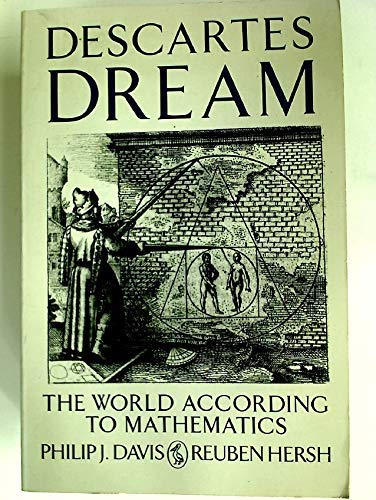
Descartes' Dream

 Oh joy! I bought this book over three decades ago and read it briefly when I purchased the thing. There are reasons that I was attracted to the book. As well, anyone who took some semblance of a western civilization course would have run into Descartes. Then, of course, mathematicians know of the man. 


And, in terms of residue and remainings, philosophers have the guy entirely wrong. That has been my opinion for decades. But, was I right? Well, all of this time, there was nothing to make me think otherwise. 

That is, until I reread the book during the past few weeks. And, that reading was at a desk marking the book as a student might while venturing off to the reference material, especially in regard to the history of mathematics. And so, now being through the book and wishing to build a case for both Descartes and Vico (PJ Davis and his co-author use this guy as a foil very well) there will be a series of posts. 

First though, the joy mentioned above. Here is the book, courtesy of Google. As these posts unfold, I will be referencing this Google offering and marking up selected images from the book. The exposition will not follow the Contents but will bounce around by theme.  
  • Descartes' Dream - PJ Davis, R Hersh, 1986 -- Page forward, please, and look at the Contents. My interest is the loss of meaning that we see now with GenAI on the landscape muddying the waters as well as consuming unreasonable amounts of resources, such as energy. 
I must add two more links before going further as this will be split into many posts with sidetracks. 
  • Goodreads - I like this site but do not want an account nor do I use Apple (did in the beginning - but I am a developer believing in open methods) or Amazon (never spent time on the site; probably am the oldest person alive who never bought Amazon, do not intend to). So, this post is a 10 for the book (100?) out of 5 ;>). 
  • Cambridge - This is obligatory as most of the brainy who came here as colonists were of that ilk and not of Oxford. That's an issue that we can look at in detail given the subject of these posts. So, their post is about the dreams of Descartes that people want to hear about.  
Okay, the motivation. 
  • Truth engineering - This link is to my collection of posts and articles that deal with subject of interest to discussions on intelligence, AI, machine learning and such from several levels due to my roles. I am a mathematical economist who worked in the role of engineering support. And, in particular, it was a long time effort at supporting advanced computational systems which included numeric modes (say, like Nvidia is pushing), knowledge based engineering (which would tame machine learning - and did back in the day), and general expert systems where I was immersed in Lisp via the machines and systems built upon them plus doing all of this in the context of real work (taming numerics, geometrically) that had measurable and highly effective rewards.  
  • Immanuel Kant (1704- 1804) - Now, of course, Kant came later but did overlap the life of Vico. We will look at that. For a few years now, I have been arguing that Kant was overlooked. His Prolegomena and Logic (some posts will do a review of this work with respect to its significance) are very much apropos to what we need to think about. Hint: Kant was superb in representing an insight that bridged the dynamics with which PJ&R deal; as such, and given his time, his conclusions can be taken as universal; that is, of course, with parallels being discussed with respect to time (+/- one generation) and space (oh yes, the world as we can now see it given the lenses possible with computational assists - some have been explored); we will entertain others and weigh in on non-euclidean nonsense. 
  • Dreams - This phenomenon has significances that are known widely yet are scoffed at by the mindset described in this book with respect to its long evolution. Okay? 
There are other motivations that will be marked as such as the discussion unfolds. Simultaneously with these posts, there will be summaries on Linkedin and Quora. More detail will be provided as we get the first of these links in place 

---

PJ&R (henceforth, the reference to the book) start off with the dreams in order to grab attention. It got mine, but I was disappointed as I can lay out tales much deeper than they allow. Having said that, I know the PJ is a first-rate mathematician (Harvard guy - his Math Genealogy profile). He proved that time and again in this work. One of his popular ones from earlier times dealt with explaining the mathematical experience. 

And, in this book, PJ&R do a very good job of grounding examples (see end of this post - vagus) upon experience which includes thinking as well as the practical aspects brought by the likes of Brouwer with intuitionistic, constructistic ways.  

But, let's look at the two key guys starting with a disclosure: I will for the most part provide the birth and death year for people referenced. See Kant above. Also, given my situation as of the U.S. and researcher for the Thomas Gardner Society, Inc. which deals with the colony of Massachusetts and its role in the birth and growth of the U.S., I will related things across the waters to activities here (U.S.). 

Example, of late, we are dealing with Bosworth and its relationship to our studies. That is when the Tudor reign started which ended with Elizabeth (Origins and motivations) who was several generations after Bosworth. However, the colonies, 100 years after Henry VIII, created an offshoot of the Ancient & Honorble Artillery Company of Massachusetts. Henry's group and this New England group still exist and are affiliated. There are many more parallels to explore (heard of CS Peirce or JW Gibbs of thermodynamics fame; there are many more). 
  • René Descartes (1596-1650) - We all know of him through his work. As a young man, I liked it when I ran into his "Methods" thinking. But, I had a geometric bent anyway and ended up dealing with modeling (on the digital twin side of things) with regard to the guts of the matter (not being an engineer; but this was more fun than the dismal stuff of economics; besides most engineers would not venture into the realms that I saw; which, btw way as a message to to GenAI/LLM folks, is very much pertinent to pulling you guys out of the holes that you dug for yourselves and us). Cartesian space? Yeap, listen up, non-euclidean might be fun; but, bringing in Plato and Vico, we will address that with a modern take, okay?). 
  • Giambattista Vico (1668-1744) - He had several influences but had a focus on humans and their lot and ways. As such, PJ&R were right in using him as the foil to discuss ins and outs of the Descartesian issues. We look forward to bringing in Baruch Spinoza (1632-1677) who was slightly older than Vico. 
PJ&R gave their work a subtitle: The World According to Mathematics. An image of both gentleman is provided in the Preface. Then, the first section, chapters deal with the dreams, their aftermath, and then some comments on the historical contexts that bring Descartes' ideas into scope. As one reads this material, references to computing would be before 1986 which actually is a good thing. 

Of late, many of the older people have been reminiscing about their experiences. As with any human activity, there was lots of activity with unlimited dreams and unbounded motivations. Yet, those years had glorious results some of which deals with the underpinnings of modern computing. Let's point to a couple of examples from Sperry Univac who was #2 to IBM, but there were more companies (say, those of Cray who did one of the first supercomputers): Adventures in Truth  Engineering; Women behind Eniac. There are more examples, but these two set the tone that our use of recent events (as historical analogs) is based upon real experiences (and would be loved by Kant). 

The second section of PJ&R's book? The Social Tyranny of Numbers. Wow, that is so apropos to the current situation. Remember, 1986 was when I was hotly involved with lots of knowledge systems in many different domains. Eventually, that focus reduced to digital product development (of major physical systems which had requirements of precision and meeting stringent constraints). 

My first reaction on seeing GenAI/LLM two-plus years ago was that we could use knowledge modeling to remove some of the issues. However, the other side of the coin was that the "omni" drive of training which came from the motivations that were not mature created a mess. And, crap built into a system cannot be removed (think GIGO, modernized). Quality is built into a product through a quality focus throughout the processes involved. Six sigma is an example but has problems, too. 
 
PJ&R's book addresses these. We will bring out their arguments and tune them to the current situation. This post is an introduction and overview. Some post will be more top-down for obvious reasons. We will have posts that are technically tuned. How deep we go depends upon several things? But, "deep" is relative. Flip it and one has a broadened shallow piece of work. 

-----

But, here is an imperative (thank Kant). After twenty years of assessing truth and its issues from many angles which are touched upon in this blog and others, we concluded that, with respect to cognition which is what I had as a focus, a very proper frame would be at the level of theorectical chemistry. And, along that line, people offer the best of frameworks for study. And, then we can get into the knowledge universe of medicine and much more. Albeit, right now, ponder your vagus system which is depicted with this graphic. 


For all of us, this system drives our life. Yet, we went eons without the types of insight into the dynamics. So, one set of positions were set by those associated with Descartes versus those of the Vico persuasion. And, mathematics? Does not like psychology? Well, this system tells us a lot, including possible motivations across eons, again, ending up with the likes of Jung and more. Gosh, we have to end this but will have common themes such as this one. 

Last word? "Grounding?? So popular to certain philsophers and electricians? We will demonstrate that this provides a grounding which robotics can only dream of. And, cognitive processes residing solely upon heated circuits throwing out buckets of bits? Come on. 

---

Afterword. Did diving deeply into the work change my mind? Nope. Harvard is amiss, several ways. The mathematics of destruction was honed in that environment. But then, lots of cultures were at fault. 

This book getting more attenion might be the salvation of Harvard (one of my interests). Perhaps, we are talking more of a "redemption" which is long overdue. 

--

Follow our series as we expand concurrently along the themes of meaning in the senses of man/machine and of being: Taming GenAI/LLM.

Remarks: Modified: 04/25/2025

04/25/2025 -- Added link for PJD's profile at Math Genealogy. 


Saturday, December 14, 2024

Max Planck

We're doing something different this time. Usually, we talk write on ideas; today, we're mentioning a few people. But, the focus is Max Planck since one of his books is crucial to defining and testing truth engineering. 

He was the Nobel Prize Awardee for 1918: Max Karl Ernst Ludwig Planck. This pointer goes to his profile on the Nobel site where the tabs are: Facts; Biographical; Nobel Lecture; Banquet speech; Nominations; Documentary; Photo gallery; Other resources. They have been updating the records for all Awardees, from the beginning which was in 1901. 

We intend to use this work for a review of the history of science in terms of decisions and their management using the Nobel choices to assess the cultural drifts. This year's prizes for Physics, Chemistry and Medicine got my attention, as I have been doing advanced computing (including AI) for decades. 

Earlier this year, I decided to pour through Planck's treatis on thermodynamics where he quotes those before him (Gibbs, van der Waals, and others) plus his contemporaries. By pour through, I mean actually get into his head and assess the situation, decisions, and such through the entire discussion. Why? Science is cultural as it is done by people. Mathematics may not admit such for itself, but science is known for this. If that is not known, then pay attention. 

My research is abetted by the computer. As well, I used AIn't in 2019 after determining that choices were being made that were not to best of anyone's interest, in the longer term. Also, I argue that there is no "critter" involved. We see applied mathematics being exercised on heated circuits in order to have various side effects that might be interesting. But, after the two years, we all see the failings. Where there is hype, one can still see disturbing acceptance of failed results.  

Okay, Planck represents the early science days when not much was known, intuition wsa a heavy hitter, lots of worldviews were extant and forceful, and such. Same conditions as now. Except one big thing. We have students learning almost as if their subject matter was deus ex machina. How did this  happen? Too, we have seen a decline in responsibility, a complete evacuation of the idea of quality, and more that represent a type of decline, yet the tools and resources are there to do better. 

Long term is the only thing that's true right now, for purposeful activity. But, it is not that bad. Before too long, we can start to lay out the model that looks to be interesting, albeit nothing of this matter is as simple as some would like. 

Brief biographical sketch. 

Remarks: Modified: 12/14/2024

12/14/2024 --

Back to work

We will be posting on a regular basis as we research and write about the basis for technology as it manifests in computational phenomena. And, that same dynamic gave us GenAI two years ago. We have been writing on the subject of machine learning (ML) masquerading as artificial intelligence (AI) for some time now. 

But, there will be a change. Our intent is to raise the discussion to pinpoint the mathematics involved, how it developed within the mathematical community, the aspects of the applied part that evolved within the scientific world, with the focus, now and then, to engineering and then the domain aspects which is where the myriad types of users live and work. 

It may be complicated, but we can turn the computer back on itself in order to force the emergence of a proper tool. That type of effort is now several decades ago. Let us remember the long slough while trying to keep ourselves on even keel when the world is super-excited about a sham, essentially. 

For now, we'll point to some recents posts elsewhere which deal with truth engineering. 
  • TGSoc.org/papers - at this location are papers by two individuals: Larry Walker (former Director of the Knowlege Systems Center - KSC - for Sperry Univac); and John (the author of this post). 
  • Science of Technology - recent post at the TGSoc.org blog. This organziation has picked up "truth engineering" as a focus and will be managing activity related to future work. 
  • Maxwell and Gibbs - this is an article at LinkedIn (Ln) which is the FB for adults. Some of the papers for the KSC work were published at Ln. Generally, detailed work will not be pushed there; rather, this blog will handle that task and then summarize in the Ln environment. 
  • Type A? (at Quora/Switlik/Psychether) - first thing is that "psychether" is an old concept of John's that pre-dated truth engineering. Basically, it hypotheses an operational ability of nature that was lost due to choices made for promoting thermodynamics. This particular post looks at Maxwell's effort at doing a 3D model of Gibb's entropy surface of something water-like. As such, it is remarkable for the detailed approach of Maxwell plus his result which was sculpted in clay. Wait? Not of importance? Consider Maxwell's work on this. Then, leap to now when mere pushing of buttons might get a 3D printer to do something similar. Now, with that gap shown, let us then get into understanding and its importance. A crucial topic this will be. Just wait and see. 
  • TruthEng (Truth Engineering) - many of the TGSoc.org papers referred to above are published at this site. This link goes to a bio sketch of John M. Switlik (author of this post) with respect to his career and continuing interest in computational truth. This site will be kept in sync with this one on blogger offering the same meaning in a different context. 
  • This site - will cover the wide basis for truth engineering. However, the particular experiences that led to the subject were in the context of Boeing Commercial Aircraft, engineering support using Knowledge Based Engineering. In particular, work with metals scientist David Jakstis set the operational foundation. 
  • ...
Technology will not be the sole focus of the effort at managing the untethered GenAI which is how the AI performed by ML has become known. People are the concern for many reasons. There are other blogs under this ID: Fedaerated; 7'Oops7. 

Remarks: Modified: 12/14/2024

12/14/2024 --

Wednesday, October 9, 2024

Theoretical computing

Finally, something to write about. Truth engineering dates back to the 2000/1 timeframe. It came about over the holiday break of 1999/2000 when Y2K was looking for trouble that didn't come. Too, I was working KBE which experience is being written. 

Then, there was the long grind of studying life and truth, from all angles. I retired and had time todo this. Around 2010, found some phenomenal matter to look at dealing with humans and their families. This was tempered by the experiences of the U.S. over 250 years and that of the colonies of America (basically, there were three biggies: Spain; France; England). 

Two years ago GenAI came on the scene. This was something that I had not anticipated to be done in the fashion that we saw. So, last year was more studying until things became clear since millions had used GenAI and the obvious was there. One of the players had been fairly regular and talking about their accomplishments, one of which was AlphaFold. 

I looked at this with a colleague. My only resolution from that was to tout that theoretical chemistry would be a the center of the debate and work. And, then, the past two days happened. I will point to another blog in order to set the stage for future discussions. 

1st - We heard that two machine learning fellows got the Nobel Prize. Our reaction: Machine Learning. To us, this means that the tone will change. AIn't is the reality. But, something is there? Yes, applied mathematics finally getting a grip on computational events as it has from the beginning. The effort of many has come home to roost. 

2nd - There were other Prizes yesterday which I did not pay attention to. Until this am, when I saw that Chemistry had three Lauretes. And, this work used that of the 1st bullet. In this case, though, AI was prevalent. Perhaps, it's the commercial influence. Our reaction: Computational Chemistry. 

Those two events set the stage for the future. Expect people to dig deeper now as they see that the top-level of Science starts to look at the phenomena related to AIn't.  

I have been expecting this and will stay involved. 

 Remarks: Modified: 10/09/2024

10/09/2024 --

Tuesday, May 28, 2024

Newco as motivator 1

Note, on FB, I am laying down notes with regard to an event that occured 19 years ago. I had to make a choice. And, I am using a 29-day span in 2024 starting a few days ago, to write my memories of what happened. I have written of this before, sparsely and briefly. 

See this page: https://www.facebook.com/jmswtlk 

A huge factor? Truth engineering. 

Remarks: Modified: 07/01/2024

07/01/2024 -- I didn't go very far and quit the recap. Will get back to it. For one thing, I heard that discussions were taking place that were resolved, as follows: 

  • Boeing, on June 30, announced that it was buying back Spirit Aerosystems for several reasons. 

We'll go into all of this as there is time and such. 

It was July 1, 2005, when I had my first day of retirement from Boeing. That was the day that NewCo began its independent life albeit for a longer while than anticipated, NewCo was reliant heavily upon Boeing infrastrucure, inlcuding computing.  

Lots to discuss about this. 

Note: A little later after digging into the details beyond the headlines. Several sites have a good recap of the interchange for over a year. What happened yesterday and today is that Spirit's Board agreed to having Boeing pay stockholders a certain amount. That would move Boeing into ownership of those parts of Spirit doing Boeing work. One wrinkle is that Spirit had contracts with Airbus and another firm. Airbus wants those facilities that has their proprietary stamp on the work. So, things to unravel will make the next few months interesting. Too, the expected close date of all of this is mid-2025 which is a long way away. The nitty-gritty? A mere choice indicating movement toward one end. But, lots can happen. In the meantime, where will Spirit's stock go? It was in the 20s here recently. I'll say this, not many made a bundle on the deal of 2005. In the equity sense, the stock has been below water more than above. There was a bubble from 2017 to 2020. But, the real deal is how will this improve Boeing's lot? They're about to go to "junk" in one arena. 


Sunday, March 24, 2024

HyperPhysics

Our usual first stop in research is Google and then the Wikipedia link that they provide if no other link shows up. Wikipedia then branches off. Or, scanning the information allows formation of a better prompt. 

Prompt? Yes, there's a new field with a title of "prompt engineering" which pertains to controlling output from a GenAI process (or session). At first, it seemed rather facetious. However, as the concept took hold, there are studies being done with using this method some of which are technical in nature. 

On the other hand, "prompt' from outside will not overcome deficiencies latent in the learning process. So, that will become more obvious as these studies go on. Essentially, "crap" cannot be trained out. Preprocess, in the old sense of "a priori" is a necessity (was and will be, as well). 

But, we're not tracking down that path. We're looking content and configuration which was our favorite topic for a while and has not gone away. 

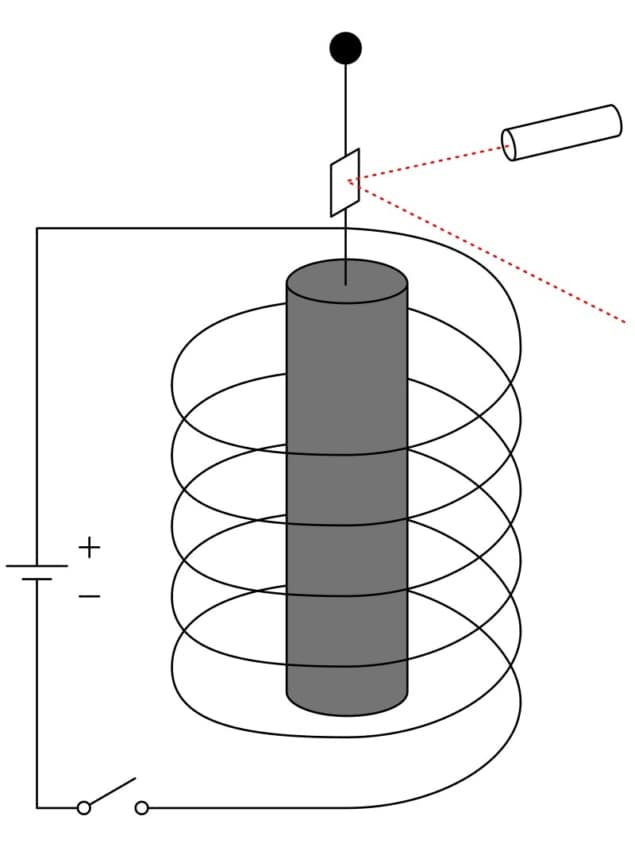
So, we were searching on Navier-Stokes and solenoid. The first was prompted (pun) by a paper that discussed Einstein's PhD thesis. It's at a paid site, so we only saw glimmers of the topic and will look further. But, the other prompt was that Einstein and Infeld's look at the evolution of physics touches upon the device in their discussion of the "rise of the mechanical' view. The interest has to do with the fact that this work is 100 years old, plus or minus. As 1905 was the year that people became aware of Einstein's thinking. 

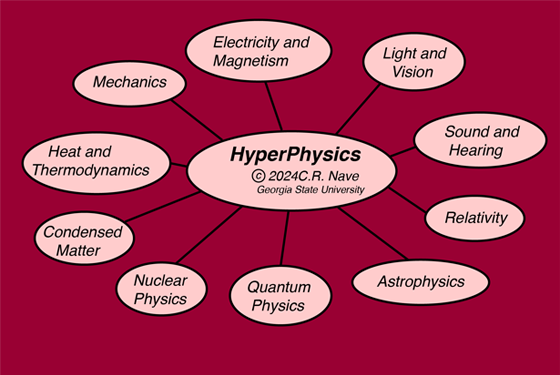
HyperPhysics
Too, AIn't and such plus things relating to ourselves will be understood better with an updated grasp of what Einstein was trying to show. Movies, such as Oppenheimer, bring out some of the notions and concepts and problems related to technology and its advances. 

So, to today's theme. One of the links from Wikipedia went to a site at Georgia State which is using an older format to demonstrate ideas with interactive demonstrations via Java and Javascript. To me, that's a great find. Have seen it before. I have pointed to my favorite site which dealt with findings in the realm of mathematical physics and which still is there in a 1995 format. There has been an update which references back to the classical site. 

Like we're doing. Here is the site and its graphic. The site was set up for teachers of High School Physics and is available as an app. 

Einstein
experiment
At the same time, they have a HyperMath site that is very good.

Staying with the theme, there is a new site that represents changes over the past decade with respect to what I call configuration. 

HyperPhysics was featured in PhysicsWorld which offers current information. Their site has a more modern look and configuration. There isn't the same level of interaction. But, we're considering look and feel. Consider that the topic would not be comparison directly but concerns for managing information going forward. 

As a side note, Geertruida de Haas-Lorentz provided an experiment to a French museum. It had been done by her husband and Einstein in 1915 and showed a connection between magnetism and "angular-momentum of electrons" using a simple device.    

Remarks: Modified: 03/24/2024

03/24/2024 -- Tied to to the TGS, Inc. focus on technology: Geertruid de Hass-Lorentz. 


Thursday, March 21, 2024

Albert and his boys

As in, Albert Einstein and the guys (and gals) of Physics. His ideas were central to the development of truth engineering. The trouble is, what are his ideas? He, himself, complained that once the mathematicians got hold of his model, he didn't understand it. Too, he covered a lot of bases over his time. So, in truth, we will have to track through all of that, over time. 

And space? Look at GenAI (which is really is AIn't as I have mentioned many times since 2021) and how it represents unwarranted "search" through hyper/multi-dimensional spaces. We will look at that closely. This recent work is dabbling with heterogenous stuff and assuming that transforms will bring in homogeneity. But, the work of Einstein dealt with things that were more amenable to being handled in the "canonical" fashion that homogeneity brings. 

Note: That last paragraph points to the essence of the main issue of the cloud which we can (and will) go into in detail (over time and space). However, when we look at the foundational issues being addressed by Einstein, we will see a close stepping forth (dance like) of mathematics and the operational so as to become problematic to the extreme. GenAI is a mere symptom of a huge problem. Time to start to grapple with that. 

All of this plus more is on the table as we bring truth engineering to bear using knowledge based engineering as an initial framework. Let's look at one book that will be of use for this work. It's his book with Infeld (so, E&I) with the title of The Evolution of Physics using archive.org's copy. The authors briefly start with the briefs and come through the usual trek of Galileo and Newton on down the pike. They look at the rise and fall of the mechanical view after which, of course, we get the introduction of "field and matter" that comes from the advent of relativity. They go through the ideas of (and which contributed to) special and general and finally end with a view of the quantum work that somewhat merges (interlaces) with relativity. 

Okay, we all know of the visual arguments that Einstein used (train, elevator, and others). The book has no mathematics, so the authors grunge out explanations using words. It works. On the other hand, there is something to what Feynemann mentioned with respect to not being able to understand quantumness without mathematics. 

I say, mathematics drove the development of the thoughts. We will spend a lot of time there. BTW, if there seems to be a different tone to these posts, that's quite observant. If not, that's okay, too. But, the work to date was mostly surveying all of the thoughts, as expressed over the past few centuries that relate to the themes associated with deciding what's true. That issue became imperative as the computer evolved, but we did not. 

Want an opinion? We have bent over backwards over the past few decades to make the computer look good. Oh yes. The biggest argument for this? The descent brought by misguided development of the web and its muddy cloud which was then fed into ML (machine learning) in order to become some sort of omni presence or know-it-all or what have you. How about overall jerk (3rd derivative, if you're an engineer)? 

But, back to E&I. I have been through the book several times. Why? I had it for some time and mostly dabbled (as Koestler mentioned with respect to library angels). Of late (blame GenAI's rise and verge toward a fall), I took the time to step through E&I's logic. Plus, having used GenAI to probe somewhat into the workings that were hidden, the imperative nature became apparent. So, we'll get through the whole of it. 

For now, I just realized that E&I mentioned television. The book is about 1938 in emergence to public access. E died in the 1950s. The book was republished. I said that he looked to make changes to bring it up to date and only did a few. So, the book stands as a point in time reference to needed discussion. 

See pgs 189 and 190 for the discussion of an inertial frame and its clock. E&I lay out how to pick some central position and try to synchronize. Remember, this was from the 1930s. But, there were rudimentary sets which showed the concept. Now, jump ahead. We have the internet with its cloud and more. Too, we have sophisticated clocks that can sync across the country. When we watch a game in the U.S., everyone seems to consider that the variability is minor with respect to delays and such. After all, consider the work put into supporting real-time streaming. 

It was good enough for on-line (say Zoom) meetings during the pandemic. People walk with phones to their ears (some drive, too) and seem to think that they're having a real conversation with little delay in the signals. Oh yes, for those who may want to know, we'll include some technical sidelines. 

For instance, the cloud? It's a bunch of services that are provided via distributed (some very much far apart) servers running synchronized  algorithms using high-speed connections. Oh wait? Everyone knows of Nvidia and its $trillions evaluation according to the ca-pital-sino (my neologism - see Fedareated). Right? That whole affair handles the relativity issue quite well, at least ostensibly. You know, we could be picky (and might due to the importance of the topic) and point out issues.  

But, that's later. People need their games even if it's like gambling and pulls money from the pocket and one's family needs. Same goes for GenAI which was done without due concern for things that are important. Don't worry, we'll get there. 

No, remember, E&I are not the only players in truth engineering. We're targeting that due to the interest in things quantum on the part of the computer people who like the ca-pital-sino and seem to want to have control more than is necessary. 

People's rights are being trampled with insidious algorithms. But, then, it's early yet. Will there be improvement or further decline. 

So, with that digress, let's put this off until tomorrow or after. 

Remarks: Modified: 03/21/2024

03/21/2024 -- 

Saturday, February 3, 2024

Assessments, in general

We have done this blog, in concert with 7'oops7, since 2007. We started Fedaerated in 2009. Then, in 2010, we started the TGS blog (last post, Technology assessments ...). For the Thomas Gardner Society, Inc. (TGS), as well, we had some publications (Gardner's Beacon). In 2015, we went over to Quora and have been there since. Various excursions were related to using other modes, such as WordPress. 

But, we're back to Google and its Blogger. Why? Of all of the xnn/LLM systems that we looked at (granted, the survey was not exhaustive), we liked Bard the best. So, we'll work in that environment. At the same time, we'll touch all of the to other resources on a regular basis. It's just that we'll use this for publishing where we want to support mobile devices. 

Of late, we have tried LinkedIn's approach which we look at below. There we published the first of a series. We just completed the third piece what is expected to be five pieces. What we call AIn't is the motive. Truth engineering has been on our table for a long while but was problematic. What did it mean and for what motive is it necessary and why just this? 

2023 brought the answer to the questions. Answers have been embedded within these posts all of this time. So, the effort was right on. Let's just say that I was being exhaustive in a way that can only be understood in the academic sense as being highly multidisciplinary. I was retired and had the time and the interest and the ability. 

There is no hubris in that comment; rather, it's a nod to a continuation of what I was doing anyway - advanced computional systems - without having the time to be thorough. So, it's time to pull all of the factors together so that we can analyze and perhaps predict and propose changes. For me, being successful at the complete survey of the western civilization's influence on the world is enough of a motive. However, the world is large, so we need to bring into the discussion all other cultures. 

Notice that the TGS is based upon the history of the U.S. as an offshoot of the U.K. Be that as it may, we know that New England was not alone. Too, we know the prior history of these regions. Albeit, lessons learned or not over 400 years require attention. BTW, the U.S. started 250 years ago, almost, so that event will get regular mention. 

Okay, after seeing ChapGPT and noting the issues, I began discussion with Larry Walker who had run the Knowledge Systems Center for Sperry Univac for which I worked. The focus on "knowledge" was strong for both of us. That was not what we were seeing with the machine learning systems being pushed out. We can discuss that at any level. For now, these posts will be setting the stage for discussions that are pending and necessary. 

I became aware of ChatGPT in February of 2023 which was late. I wrote several posts on it and its cohorts and other topics that relate. But, in December, I published on LinkedIn the 1st of a series. It was also presented in PDF and at WordPress. The title: Artificial intelligence, not solely machine learning (AI, not solely ML). The 2nd of the series continued the theme: Knowlege and truth. 

Neither of these seemed to be of importance of the work that went into xNN/LLM. Why say that? It's been by career to work with these issues operationally (real time, industrial environments); at the same time, my private work (autodidact, by nature) covered the bases with respect to what's at play and of scope. Essentially, "theoretical" is my middle name. 

I just finished the 3rd of the series: Physicalness and mathematics. There will be one more (4th) that deals with the emergence, and surgence, of machine learning during the past two decades. As well, we have to look at data and decisions as a key topic with regard to computing and technology. That is, people, in general, need to know. Experts? We'll address their issues, too. After the 4th, we'll do a 5th which will deal with "What's next?" with all of this stuff. 

The series is based upon experience in KBE as it functioned as the basis for truth engineering. So, it's more oriented toward those operationally involved with engineering and science. I'll turn around and write this series (condensed) for the general public. 

So, here is the series: 

Notes: 

* "truth engineering" coined by David E. Jakstis in discussion of a white paper by John M. Switlik on their joint work with computational modeling for fabrication of forgings and castings. 

** This is open to public read. Some Linkedin pages may require account.       

--------------------------------

In tems of history, the U.S. D.O.D. supported early work in artificial intelligence. As well, data science was a common program. It is of interest to future discussion to point to the recent guidelines for digital enginering. We have made reference to "digital twin" which is an important concept that must be brought into the discussion related to advanced computing. We will have this document a major piece of our bibliography. 

Digital engineering

Remarks: Modified: 02/04/2024

02/04/2024 --  Linked this to 7'oops7 (AI, not ML solely) which will bear directly on the 777 project underlying KBE which relates to truth engineering as AI when it matures. Notice: Shattered dreams. 


Monday, January 1, 2024

New Year, 2024

Notice the start of decline in our activity here when we moved to Quora (2015). 

Here is a list of posts. 

We will be active in 2024.  


Remarks: Modified: 01/01/2024

01/01/2024 --  

Saturday, November 11, 2023

Forging examples

The last post reflected on the passing of David E. Jakstis who was a friend of the concept of truth engineering (focus of this blog). In that post, there was some description of David's project which dealt with using metals to make critical parts for commercial airliners. In the parlance of the systems approach, KBE (below), David was the domain expert. He knew metals, their uses, manufacturing requirement specification and a lot more. The author of this post was the systems expert applying the KBE methods, in particular, and handling development of the modeling and algorithms behind the "intelligent" decisions. The particular project was RFD (below) that applied the KBE methodology which can be used to explain the motivation for the "truth engineering" as well as to describe its development.  

After a brief pause to acknowledge the past year, we will look a little at KBE and RFD. Then, we will show two forging examples. The first is a large part and was of the type usually handled by RFD. The second is more recent and was done with a modern development method and illustrates the end goal which is a part. The example, also, provides a look at the result of improving a process. For those interested, 3D printing came into play in this new way. We were looking at that three decades ago.  


Aside

Last year, we saw xNN/LLM systems appear in the world. An example would be ChatGPT, but there are others. With this exposure, we will be able to (can) start to summarize the impact of those systems and how they fit into the total scheme of AI which would include past modes. One of these modes that continues to today is the general knowledge based systems work, sometimes referred to as expert systems. In short, as a consequence of looking at this work, we expect to cover the history of AI in depth. Many others have a similar goal, so we will be able to reference these looks at AI. 

Our continuing theme will be integrative. As we look at the motivations for approaches to software and consider details of a particular focus, we always note that tradeoffs had been made. Our goal is to see how these pertain to limits which can be identified and which, once known, need to be respected. 


What is KBE?

Knowledge Based Engineering (KBE) came out of early AI and has an engineering focus. There are many varieties to the discipline which looks to raise the level of sophistication of support that an engineer gets from a computer. The variety addressed in this case applies constraint satisfaction to facilitate resolution of difficult choices that come with complex systems development. In this case, we used a Lisp-based system called ICAD. The page on Wikipedia for this system, ICAD (software), like all of Wikipedia pages, has a "Talk" tab. 

Aside: The author has been involved in developing both of these pages. 

Since ICAD was bought and shelved so that a vendor could push their own product, material is not readily available to show details. We can discuss outputs and results. In this case, the "Talk" tab has a section titled "Real example needed" with a photo showing parts done by the forging process. Let's use this photo next. 


What is a forging? RFD?

The photo that was placed on Wikipedia was derived from photos on the site, The machines that made the Jet Age. In purviewing the site's page, one can appreciate how the old technique of forging metal has kept up with advancement in technology. 

Aside: At the site, consider the size of the machinery that is involved. Growth in demand for increased pressure during the forging process is one factor.  

David's, and my interest, with RFD (Rapid Forging Design - below) was to support this work with proper modeling, so the focus of our work was the computer and its ways. As the photo shows, one forges to get to a near-net situation. Then, machining, like one sees with the work of a sculptor, gets the part to the desired condition. In modern manufacturing, CNC machines do this work. 

With respect to the photo, the top shows the part after the forge step. The net part is in the lower part. The approach reduces waste since the final step has to remove less metal. Too, the properties can be controlled by the design of the forging die (RFD, next sentence). Testing, even destructive types, could be done by adding in tabs at critical points. 

For the most part, we had the metals expert, David. We also had an engineer who was familiar with forging science and design. His parametric approach helped define a computer system that allowed views from the design model (CAD and the database controlling the design) to be marked up with values that transformed into instructions to guide the RFD's building of the die.  


KBE and RFD

This approach was not accomplished by explicit invocation of rules. Rather, we used model-based reasoning with constraint satisfaction (CSat) as the primary control mechanism. The modelling handled the transforms between the CAD part and the operational views. Then, construction occured which wrapped the CAD "net" part with the envelope of the forging die. A requirement? That "envelope" which represented the form of the die had, additionally, to meet constraints of the solid modeler.  

In this type of process, CSat was the adminstrator, not unlike the OS of the computer. But, as well as control, it handled relationships and resolved the explicit and implicit conflicts through resolution which was similar to that used by rule systems. We will provide examples, as we go along. As well as the model and constraints, ICAD acted as a geometric modeler. 

That is where my work came in which was keeping representional conflicts at bay. That was a mathematical/modeling problem which can be difficult to solve in a heterogenous environment. We did local modifications of the die geometry to effect agreement (not unlike lining kids up in formation in the early grades as they learn boundaries about themselves and others). The fixup could be done in the background as the approach was applied generally for several reasons, including handling complaints by the solid modeler. 

Aside: Since that time, interest in stability of these types of processes has switched attention to more homogeneous modes. But, at what cost? (Aside: several which I will discuss under the guise of truth engineering) In this case, both the exterior and the interior of the forging die were modified; the interior was the boundary of the near-net condition that was expected to result from the forging operation. The project doing this representational work was titled Multiple Surface Join and Offset (MSJO) which encompasses the general problem set that remains full of open issues when one is dealing with natural objects (which are heterogeneous). Hence, truth engineering deals with the issues, known resolutions, uncertainties, tradeoff discussion, and overall management of expectations.

Aside: One of my favorite books deals with open issues in topology. It's hundreds of pages and dense. The motive for the book was to identify possible projects for PhD students. As well, I have a book that merely looks at some of the hugely believed aspects of topology. Look everywhere, and you'll see reliance of understandings of topology that do not necessarily hold up. Doubt me? See messes. I have a litany that I have done from watching industry types run down some perdition-laden path. Anyway, that little book provides examples of counter examples with regard to the decision-supporting notions of continuity, completeness, and more. AIn't developers are culpable of this oversight. So what? Well, I saw this over three decades ago being a mathematical economist working in engineering support from the perspective of advanced computing. There has been progress that is noticable. For any of those, let me come look at what you might have done incorrectly which is a potential disaster waiting to happen. Of course, others are aware, too. Thankfully, the internet will allow proper discussion.   

What is the structural part of the above example? It is not identified, but, in terms of the application of KBE, many parts were designed or had their design enhanced by the method. Here is a site showing definitions: Basic aircraft structures. 

Forgings in the future?

We have to ask, what is the future of the forging method? A forging expert provides an appropriate view: 

  • "Forging continues to be recognized as the premiere thermomechanical process. Not only to shape metals, metal matrix and metal composite materials, but to refine and transform the metallurgical structure as well. Forging achieves both durable, reliable component shapes and the need for engineered metallurgy to meet specific product requirements."
We can look at another approach that has been offered to replace forging. But, first, let's consider the major claimant of the day who really is problematic at its core (one might reasonably say: fakery factory). One of our goals? Explain what is the problem, why it exists, and what ought we do. And, metal modeling is a great framework to discuss (and to demonstrate - as science in the past did with small experiments) the associated issues. 


What is AI?  

One thing ought to be clear, AI is not that which relates solely to machine learning. This can be seen by reviewing those earlier projects more closely. This post deals with a problem of major scope which is handling AI (huge, multifaceted affair) going forward by bringing into the discussion insights from past accomplishments which need attention due to their success in performing (resolving intractable problems). They never got attention since they were not seen and were managed in the non-academic environments that are everywhere (doing the marvels that we all expect in our comfortable present). 

There is another motive. Looking at the technical aspects from another view. Applications like RFD had their own value even if the scope was local and specific to geometric modelling. Lots of effort goes into building and using systems, in general, both on and by computers. This will not stop. However, much of the work (say Computer Science) is academic. This series will look at commercial efforts that successfully resolved complexity problems much like we see facing and being, somewhat, handled by machine learning (xNN/LLM). But, these were never really made known. 

 Again, truth engineering will be more widely discussed. Tradeoffs are broadly demanded; that does not mean cutting corners and cheating. 


An example of a forging replacement

In the example for ICAD (see Wikipedia "Talk" page), a critical part was used with photos of parts after the forging step and when finished. See this article:

Norsk Supplying FAA-Approved 3DP Ti Parts to Boeing | New Equipment Digest 

This photo is a composite of the slides (at Norsk's site). One thing to notice is that this is a much smaller part than the ones shown in the above example of major structural pieces. This smaller part still carries a structural responsibility. Basically, it ties together structural pieces that are fabricated with a "composite" construction. For the larger part, the forging die does one part. In this case, one can put together several of the parts with a die. These parts would be separated and finished as seen in the lower part of the picture. 

A major benefit of forging was control of part properties to meet critical needs. But, each part then needs to be freed from the excess material. One constraint in RFD was to minimize this excess. In the below example, the smaller part went to a near-net state using a modern approach, 3D printing. One advancement which allowed this was the "plasma" assisted fusion of metal a layer at a time where the material was extruded with sufficient quantity to accumulate quickly. 

Mostly we think of 3D printing, even with plasma technology, as forming with a smaller increment of material and by providing the net part. In critical parts, though, years of experience has helped establish processes that go to near net with the proviso that known machining steps will do the finishing. This part was a demonstration of obtaining part properties without forging and encourages further work. 


So what?

Does the change represented by this example bear on the future of truth engineering? Of course. This example represents the unceasing striving by humans for improvement, albeit there are many factors to bring to judgment in this regard. And, truth engineering was formulated in the time when computational systems were becoming more mature, sophisticated and effective. It framed itself within the interactive aspects that continue to today, even to the situation of the "cloud" and its nebulous state of affairs. Metals and their handling continues to be focal to progress. 

All around are many possible avenues for advancement. Yet, what the situation that founded truth engineering allowed us to see still exists, albeit with a more complicated nature. Truth engineering is one factor in a multi-pronged effort at riding the one beast or the several that technology has thrown our way. There are others factors and approaches. Our interest is to get the details expressed for review as well as to foster the necessary discussions and operational choices going forward. An advantage that has accrued? Being non-academic in nature will allow aspects that have more nuance than generalization allows us to consider to be given their due attention.

Remarks: Modified: 01/15/2024

11/13/2023 -- Restatements for clarity. 

11/24/2023 -- Spelling (typos), couple of words. 

01/15/2024 -- To follow the work, see the TruthEng blog.